Recently, the SAFe framework has introduced the ideas of OpEx and CapEx Agile budgeting and capitalization. In this recent update in the SAFe framework, it is explained that some SAF enterprise strategies can be used to create categories for labor costs in the agile development with some being subject to CapEx or Capital Expense treatment. But before exploring these updates, it is best to tackle the subject of SAFe portfolio budgets.
SAFe Portfolio Budgets
Every SAFe portfolio comes with a purpose which is to realize some technical solutions that will enable a business strategy. But for the technical solutions to be realized and the business strategy enabled, the portfolio has to operate inside an approved budget for the operation. This is because the operating costs for the development of the solutions are a key to the business strategy’s economic success.
How Budgets Work
Each SAFe portfolio must operate within the approved and known budget. The budget is the basic factor on IT development and deployment as well as that of hardware, software, services, products, solutions and all other offerings inside the SAFe portfolio. This operating budget is an outcome of the process of strategic planning and within which all portfolios operate.
According to the SAFe framework, the allocation of the funding to individual streams is under the support of the Program Portfolio Management. They are those who allocated the necessary funding for every value stream within the portfolio. On that note, the budgets may include either OpEx or Operating Expense or CapEx elements.
The requirements and design continuously emerge in Agile enterprise which means there are no formal gate that serves as overture to capitalization. This is compared to waterfall projects and therefore points out that in SAFe, capitalization can be done either on agile release trains or value streams. In release trains with the use of program increments and portfolio kanban, there are several types of requirements that are capitalized.
Understanding the Problem of Traditional Budgeting
Apparently, there are many problems pertaining to traditional budgeting approach and with that, a new solution is being proposed. But before one embraces this new solution, it is important to understand first the problems caused by the traditional approach. For one, the traditional budgeting process seems to create multiple challenges being that it is slow and complicated, not all tasks are identified and many other issues.
Additionally, with the traditional budgeting there are the constraints based on projects. These constraints obstruct positive economic outcomes as well as hinder adaptability. By following the traditional budgeting, when the project is initialed there are challenges that simple continue and makes the economy suffer. At the same time, there are delays that constantly happen and which only makes things even uglier than it already is.
These are a lot of challenges that must be addressed with following the traditional SAFe portfolio budgeting approach. On that note, there is the Lean-Agile development process that makes for new, easier solution in terms of budgeting. It follows a more effective fiduciary control when it comes to total investment budget but with higher throughput and less friction as well as overhead.
Change process
Image

SAFe: Portfolio Level
SAFe is the proven efficient framework that has been made available and accessible by public. It is primarily designed for the application of agile and lean practices at an enterprise scale. It comes with different options to choose from and one of these is the SAFe Portfolio.
SAFe Portfolio – What Is It?
SAFe Portfolio has been known as the most important concern when it comes to SAFe. It is providing the fundamental constructs for arranging the lean-agile enterprise across the value flow in two or more streams of value. Each of these develops the systems as well as the solutions that are necessary in order to meet the identified strategic objective. The portfolio stage summarizes such elements and it also provides the fundamental budgeting including some other governance mechanisms which are important to ensure that the investment within the value streams are giving the returns that are crucial for the enterprise. This is to help the enterprise meet the set strategic goals of it.
SAFe portfolio consists of the bidirectional connection to a business. One of these is giving strategic themes which are guiding the portfolio to bigger and altering business objectives while the other indicates a consistent portfolio context flow back to the business. It appraises the business of the recent condition of the involved solution set, the key performance indicators as well as some other important factors which affect the portfolio. The program portfolio management is representing the stakeholders which are responsible to provide the best and satisfying results in the end. There are some other important activities, roles, and artifacts that complete the representation.
Important Aspects about SAFe Portfolio
As said before, the portfolio level is encapsulating people and the processes that are crucial for building systems and creating solution which are needed by the enterprise in order to meet the strategic objectives of it. Every value stream is the long-lived chain of system definition, improvement and deployment steps that are utilized in building and deploying systems that are capable of providing a consistent flood of value either to the customer or business.
As mentioned previously, SAFe Portfolio comes with strategic themes that are mainly designed to give specific itemized business goals which are connecting the portfolio to the changing enterprise or business strategy. They are providing strategic context designed for decision-making inside the portfolio, influencing the investments in the value streams and are serving as the inputs to the solution, portfolio, & program backlogs. On the other hand, these themes aren’t formed and made by the enterprise alone. The truth is that the major portfolio stakeholders are taking part in the process and therefore, they are the cornerstones of the strategy formation.
One of the arrows in the bidirectional connection of SAFe Portfolio is indicating the consistent response of the portfolio framework to the business. It involves the major performance indicators and the qualitative evaluations of the suitability of the recent solution for market application together with any weakness, strength, threats, and opportunities which are available within the portfolio stage.
Slimane Zouggari
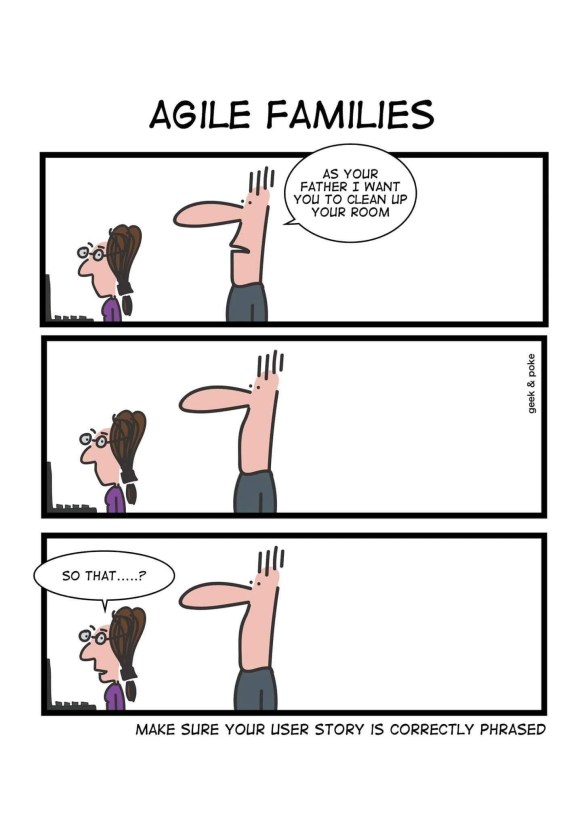
Agile Family: user story
Image
SAFe: Portfolio Kanban
SAFe recommends the creation and the implementation of a Kanban system across the content hierarchy – which includes the portfolio, program and team including the value stream. Whilst these systems do operate in the same way, and they are interoperating, still they are significantly individual systems and they serve different purposes and they are operating at various stages of abstraction.
The management and implementation of a portfolio Kanban system is within the supports of Program Portfolio Management. Implementing this system needs a material comprehension of Lean & Agile improvement practices as implemented to portfolio level practices. It also needs comprehension of the productive capability of every Agile Release Train and its velocity including the accessibility of each for a new development or business-as-usual support activity. Once all these things are understood, the business can begin to reason regarding the portfolio level advantages in a pragmatic and logical way, with complete understanding of tangible implementation context.
The SAFe Portfolio management Kanban system can be used in addressing the Epics flow, those huge cross-cutting initiatives which can influence the plan of action for the value streams as well as the ARTs or Agile Release Trains which realize them. Thereby, the capture, analysis, sanction and the release of epics in implementation is known as the material option for the portfolio and it is something that something that requires the participate of some major stakeholders, which involve the PPM or Program Portfolio Management and the representation from the influenced ARTs and value streams.
SAFe is applying the Portfolio Kanban System within this context due to different reasons which are as follows:
– To make the strategic business initiative backlog completely visible
– To give visibility and structure to analysis & decision-making which moves such initiatives to implementation
– To give WIP limitations to guarantee the teams that are responsible for the analysis will undertake it with full responsibility and will not create anticipations for implementation and timeframes which are quite unrealistic
– To help in driving collaboration and willingness to work between the major stakeholders within the organization
– To give a quantitative and transparent basis designed for economic decision-making process for such matters
Every Kanban system is specifically designed to be used in a particular purpose. This one has been made for capturing, analyzing, giving approval and in tracking epics. This system may appear as shown below:
Funnel
– Where big ideas are accepted, including new business opportunities, market changes, cost savings, mergers & acquisitions, issues concerning the recently available solutions
Review
– Epic importance statement
– Calculation of SWJF
– Refine comprehension
– WIP limited
Analysis
– Solution awareness
– Cost estimate
– Refine WSJF
– Lightweight commercial case
– Go or no-go decision
– WIP limited
Portfolio Backlog
– Epics sanctioned by the PPM team
– Consistent prioritization of the recognized Epics by the use of WSJF
Implementation
– Epics owners & product & solution management will decompose the epics into program epics or value stream, capabilities & features
– Ownership transition to ARTs and value streams
– WIP limited through downstream capability
– Epic tracking pursues
– Teams start to implement at PI preparation boundaries
Done
– The success guidelines and criteria was met effectively
–Slimane Zouggari
Product Manager
Image

SAFe: Program Portfolio Management
PPM, which stands for Program Portfolio Management is representing people who come with superior-level strategy as well as fiduciary decision-making liability within the framework. In bigger enterprises, there could be different SAFe Portfolios and each of them assists to manage a series of initiatives, usually in the department level or business unit. Every SAFe portfolio comes with a PPM function in which the responsibilities for SIF (Strategy & Investment Funding), Program Management & Governance rest with business executives and managers who understand the enterprise commercial strategy, financial constraints and technology.
They have ultimate responsibility and obligation for defining or implementing their share of the general enterprise strategy. They are usually assisted in such duties through a Project/Program Management Office or PMO that shares liability for guiding governance and program execution. The enterprises may make use of different roles and titles for fulfilling these functions. Or, perhaps, there are no departments and official names for some. Nevertheless, efficient fulfillment of duties and responsibilities is important for success.
PPM or Program Portfolio Management represents people with primary duty for Strategy & Investment Funding, Governance and Program Management in a particular SAFe portfolio. The organizations can use various roles and titles to fulfill such responsibilities or there could be an official section for PPM. Program Portfolio Management comes with the liability to join within the establishment as well as communication of strategic themes which guide the enterprises strategy and investment, determine the related value streams then allocate budgets to them, describe and prioritize through KPIs or key performance indicators.
The effective and successful fulfillment of such responsibilities is the prerequisite for the success of your business. On the other hand, the historical usage of a waterfall model, combined with quite natural proclivity to institute top and down authority on software development triggered the industry to accept and adopt some behaviors and mindsets like maximize utilization, are widget engineering are discussed at length in one and two.
SAFe defines the series of 7 transformational patterns which be utilized to move the company to Lean Agile Program Portfolio Management, shown in Figure 3. Such transformational patterns assist people to better understand the right way to fulfill primary responsibilities which involve strategy & investment funding, governance and program management yet in a more efficient Lean Agile approach. The resolution of investment and strategy funding is supporting the execution of business strategy by means of programs which are developing and maintaining the value added services and products of the company. The streams of value are fostered, identified, monitored or consistently enhanced. Investment funding has been allocated to ongoing, current programs as well as the new initiatives in line with recent strategic themes and business strategy. Supplementary lean practices assist the enterprise meet the economic goals of it. These involve the following:
– Lean-agile budgeting
– Demand management & consistent value flow
– Epics & lightweight business cases
Program management supports & guides efficient program execution. Whilst this responsibility depends primarily inside the Agile Release Trains, VSE, Value Streams & Release Train Engineer, the Program Portfolio Management could help in creating, developing, harvesting and applying effective program implementation patterns all over the portfolio. In most organizations, the RTEs and VSEs are part of PMO, in which they could share best practices, typical program reporting and measures. In some other cases, they will report this to the development association.
–Slimane Zouggari
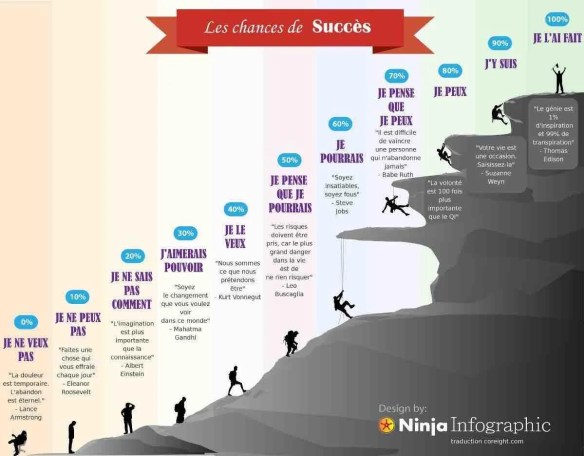
Chances of success
Image
SAFe: Enterprise Architect
Enterprise architects are rising in the SAFe and agile enterprise scene. They are becoming one of the most important people in the realization and implementation of concrete technology and development of agile business models. But what exactly is the role of enterprise architects and how important are they in the agile methodology?
What is an Enterprise Architect?
The enterprise architect and his team are the people who define and distribute the technical roadmap needed for support of the business’s short-term and long-term objectives. On that note, the enterprise architect is the person who has to know all about the architectural forces and technological components that would allow him to deliver a transitional architecture.
Enterprise architects work with system architects and business stakeholders in order to drive holistic implementation of technology all over the programs. The nature of their job counts for them relying heavily on continues feedback in order to promote adaptive design, engineer practices and drive collaboration between programs and teams in the same technical vision.
The Responsibilities of Enterprise Architects
The very responsibilities of enterprise architects are focused on specific responsibilities. These responsibilities include maintaining high level and holistic vision in terms of development initiatives and enterprise solutions. They also help in defining key initiatives in support of Budgets using architectural epics. The enterprise architect also participates in developing strategy to build and maintain the agile enterprise architectural runway.
As an enterprise architect, they understand strategic themes as well as other business drivers in architecture. They understand system architects, the role they play and communicate technical decisions. It is also the enterprise architect’s job to collect, generate as well as analyze any innovative idea and technology that can be applied in SAFe or Scaled Agile Framework. Similarly, they re-use any ideas, proven patterns and components that can be used for realizing the architectural framework.
The Enterprise Architectural Strategy
One of the important responsibilities of the enterprise architect is the enterprise architectural strategy. In terms this, one should know that the enterprise’s capability embracing organization change is a very competitive advantage and a principal constituent of the enterprise architectural strategy. There are five elements within the strategy which includes:
• Choice and Usage of Technology – Selecting the right technologies that can best support the existing Budgets.
• System Architecture Strategy – Enterprise architects works with system architects to ensure that the individual program and product strategies are aligned with the objectives of the enterprise.
• Development and Deployment Infrastructure Strategy – A key challenge on reusing configuration patterns, knowledge sharing, physical infrastructure, etc.
• Inter-Program Collaboration – Enterprise architects make sure that programs have common design practices, technology; infrastructure and have sufficient freedom.
• Implementation Strategy – An effective and agile implementation strategy is crucial in preserving the enterprise’s architectural flexibility.
These are the important elements of the enterprise architectural strategy under the enterprise architect. With the enterprise architect’s work, it is made possible to preserve the SAFe’s architectural flexibility which can very well help in an enterprise’s business needs in the future. It is clear to see how enterprise architects are important in the agile enterprise methodology.
–Slimane Zouggari
Who wants to change?
Image

You must be logged in to post a comment.